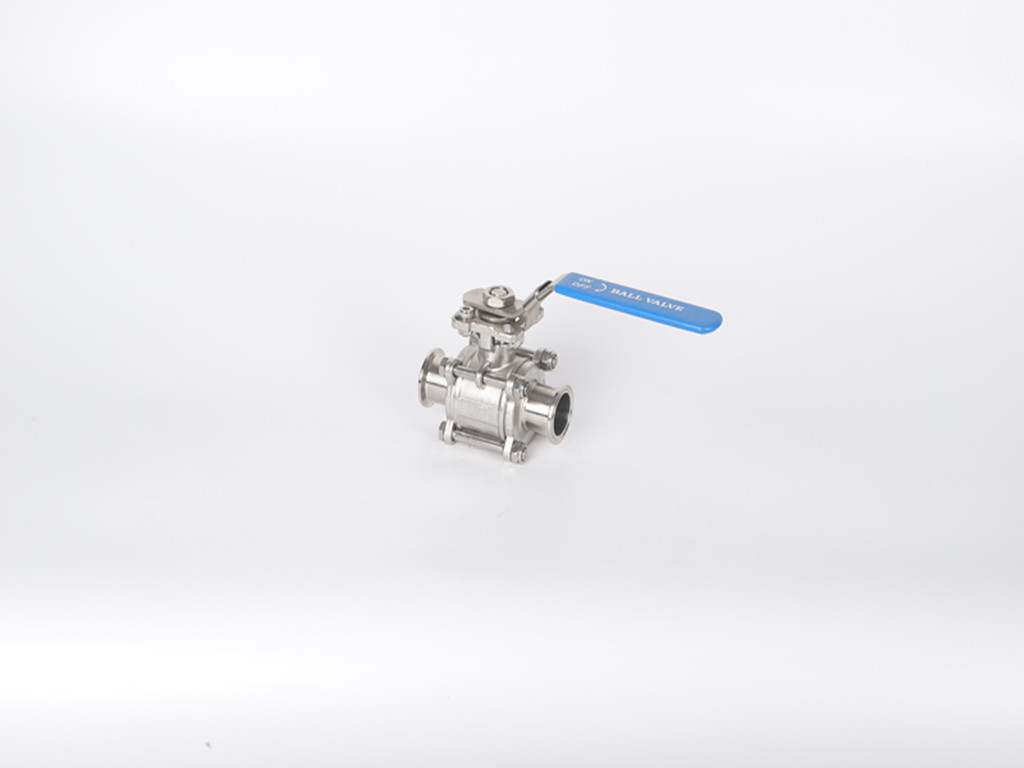
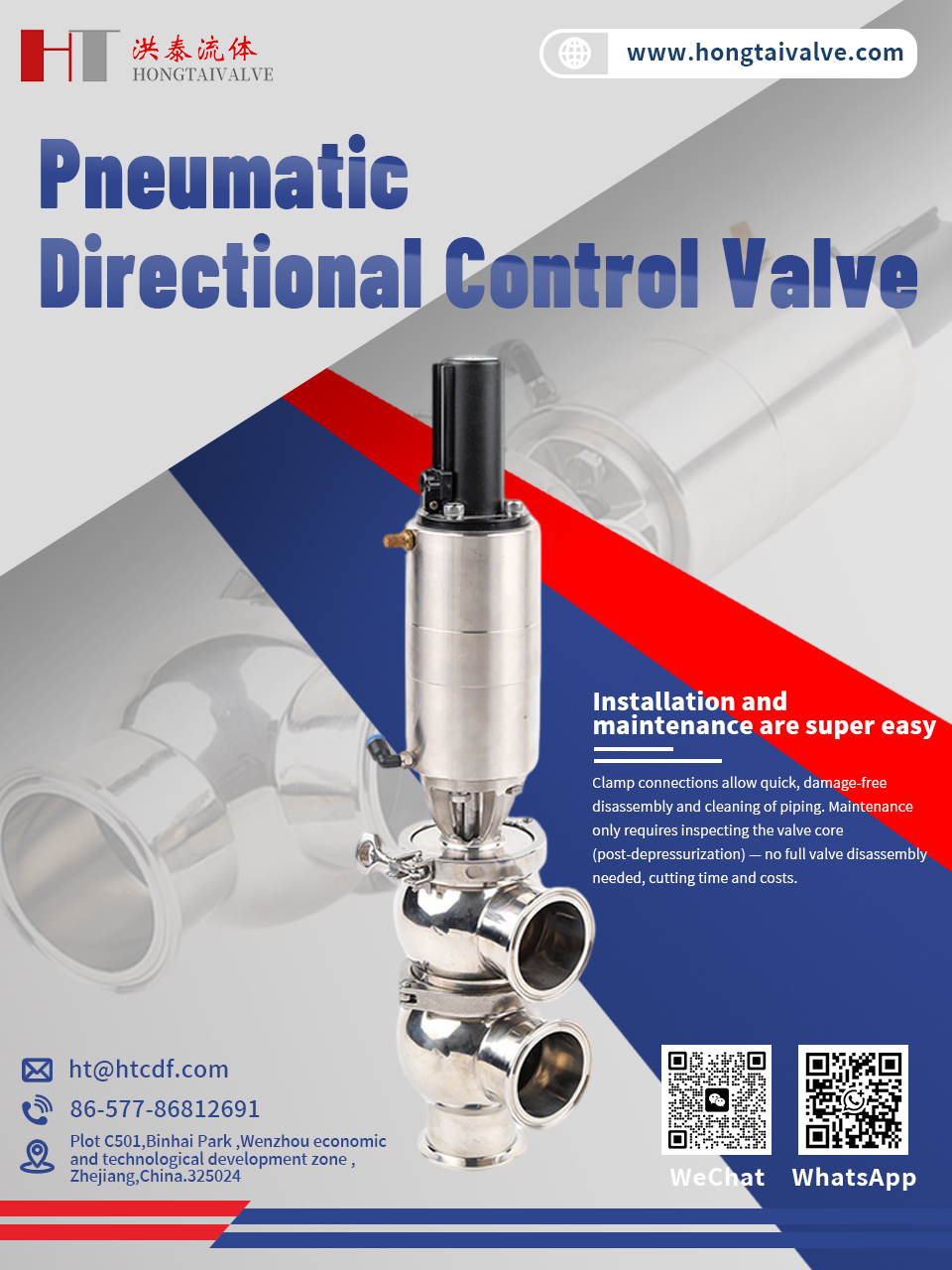
Stainless steel sanitary pneumatic directional control valves are suitable for sanitary applications such as food and beverage, dairy products, pharmaceuticals, beer brewing, cosmetics, and biotechnology. They primarily handle gases, liquids, steam, and media with high cleanliness requirements. The working pressure differential is typically ≤1.0 MPa, with a medium temperature range of -20°C to +150°C (some models extend to -10°C to +150°C). The materials are mostly SUS304/316L, with sealing materials such as silicone rubber, ethylene propylene diene monomer rubber, or fluororubber. They support butt welding, flange, and quick-connect fittings, making them ideal for scenarios requiring frequent directional changes and stringent sanitary standards.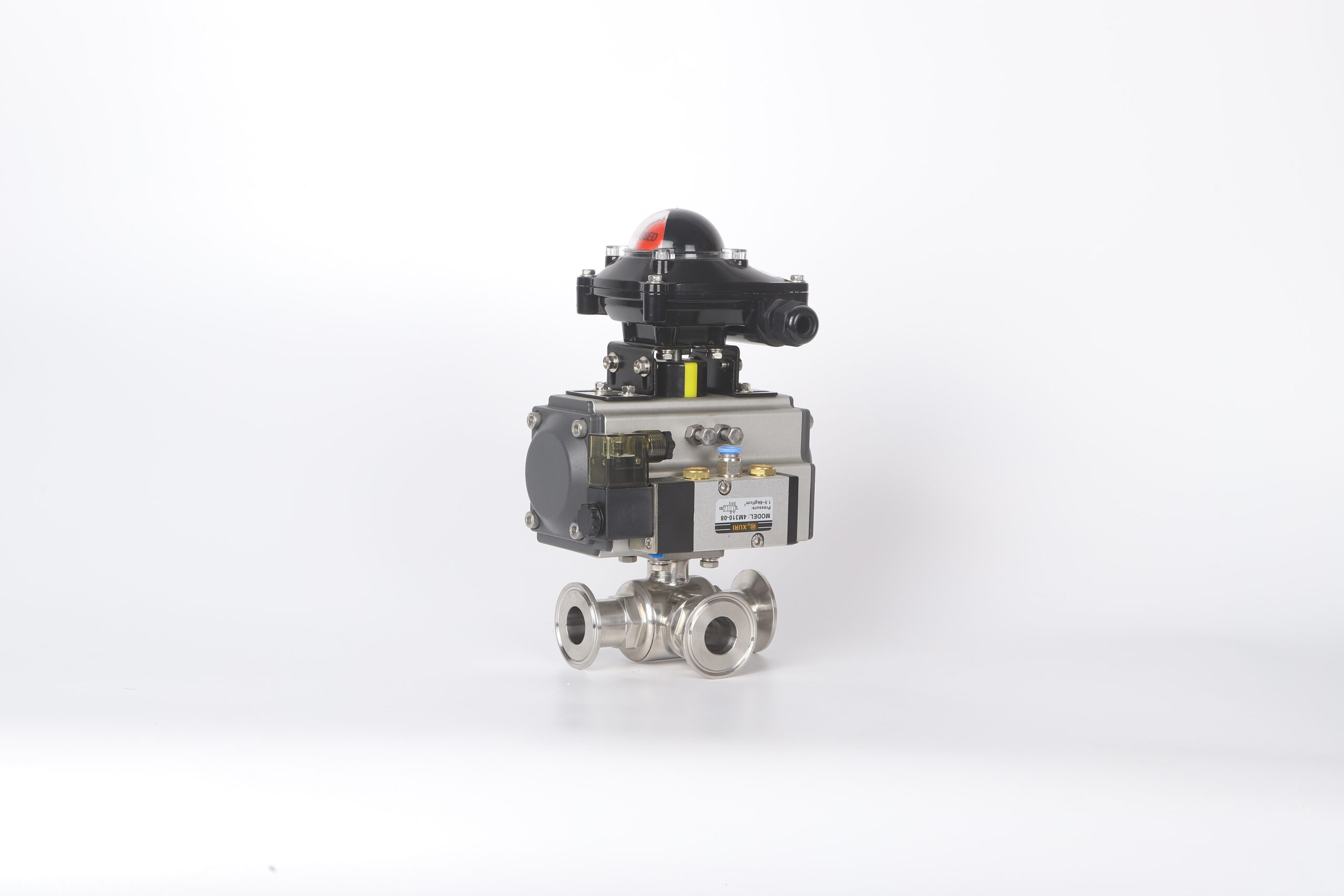
Pneumatic ball valves are suitable for water, oils, chemical liquids, media containing small solid particles, viscous fluids, and slurries, such as those found in the petroleum, chemical, papermaking, and food industries (e.g., sauces and beverages). Soft-sealed pneumatic ball valves have a temperature range of -30°C to 180°C (enhanced polytetrafluoroethylene seals extend to -20°C to 200°C), while metal hard-sealed pneumatic ball valves can withstand -40°C to 425°C or even higher (special materials can reach -250°C to +560°C). The nominal pressure typically ranges from 1.6 MPa to 16 MPa, making them suitable for high-pressure, high-temperature, or corrosive media scenarios.
Selection Recommendations:
• If the medium is a high-cleanliness fluid (e.g., food and beverage, pharmaceutical raw materials) and requires frequent directional changes, prioritize sanitary pneumatic directional control valves. Their dead-space-free design prevents contamination.
• If the medium is a corrosive liquid, high-temperature steam, or particle-laden fluid, and requires rapid shut-off or flow regulation, prioritize pneumatic ball valves. Their corrosion resistance and high-temperature capabilities are more promin